
Target Fish Species in Perdido Key, Florida
Experience world-class sportfishing in Perdido Key, Florida — home to Red Snapper, Cobia, Kingfish, and more. Whether you’re chasing bull reds inshore or battling giant Amberjack offshore, our Perdido Key fishing charters put you on the Gulf’s most exciting species year-round.
Inshore Fishing Targets – Perdido Key’s Bays and Flats
Explore the calm waters of Perdido Bay and Big Lagoon with our inshore fishing charters, where redfish, trout, and snook patrol the grass flats and oyster bars.
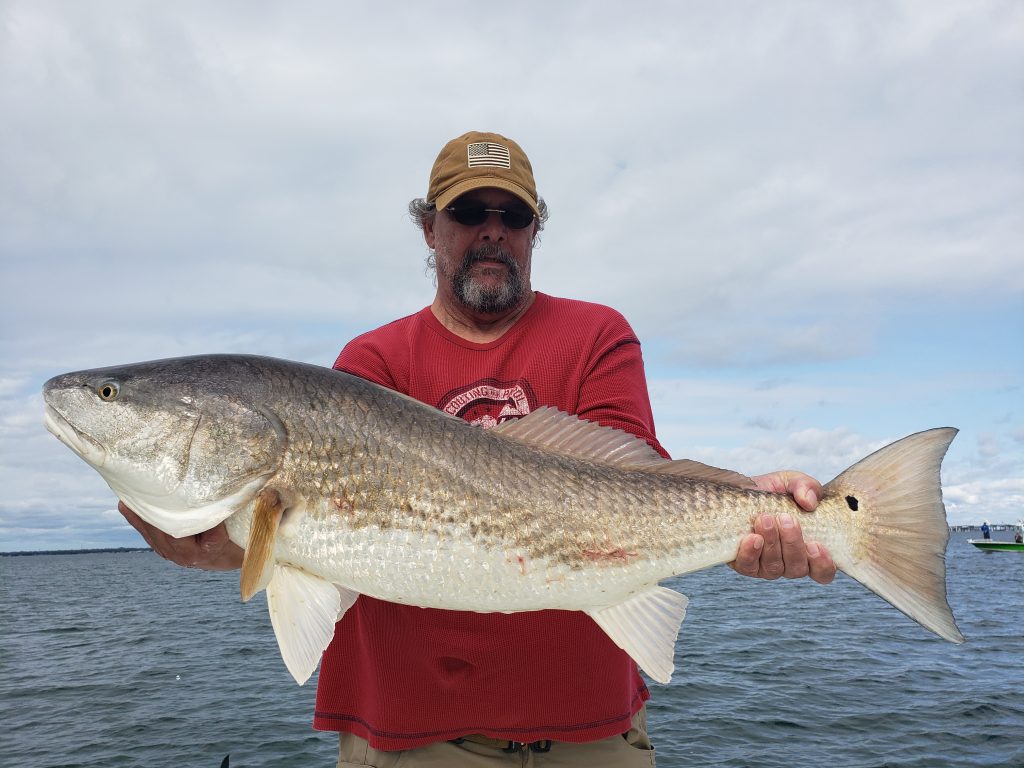
Red Drum (Redfish)
Scientific Name: Sciaenops ocellatus
Average Size: 5–15 lbs (20–30″)
Trophy Size: 30–50+ lbs “bull reds”
World Record: 94 lbs (North Carolina, 1984)
Red Drum are a year-round favorite in Perdido Key’s bays and passes. They strike aggressively and fight hard, making them a top inshore target. Each fall, schools of bull reds swarm the beaches and bridge spans, creating one of the most memorable bites on the Gulf Coast.
Best Time: October–December
Techniques: Live mullet or pinfish, soft-plastic jigs, and topwater plugs on calm mornings.
Speckled Sea Trout
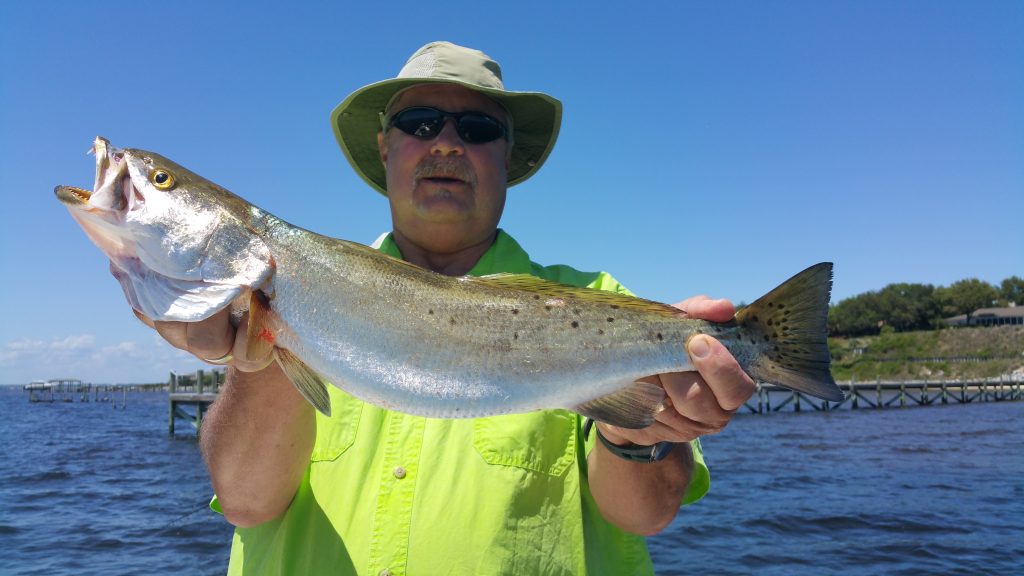
Scientific Name: Cynoscion nebulosus
Average Size: 1–4 lbs
Trophy Size: 7–10+ lbs “gator trout”
World Record: 17 lbs 7 oz (Florida, 1995)
Speckled Trout are abundant in the grass flats and tidal creeks around Perdido Key. Known for explosive topwater strikes, they’re ideal for light tackle or fly fishing.
Best Time: March–June & September–November
Techniques: Topwater plugs, popping corks with live shrimp, or soft plastics worked over the flats.
Black Drum
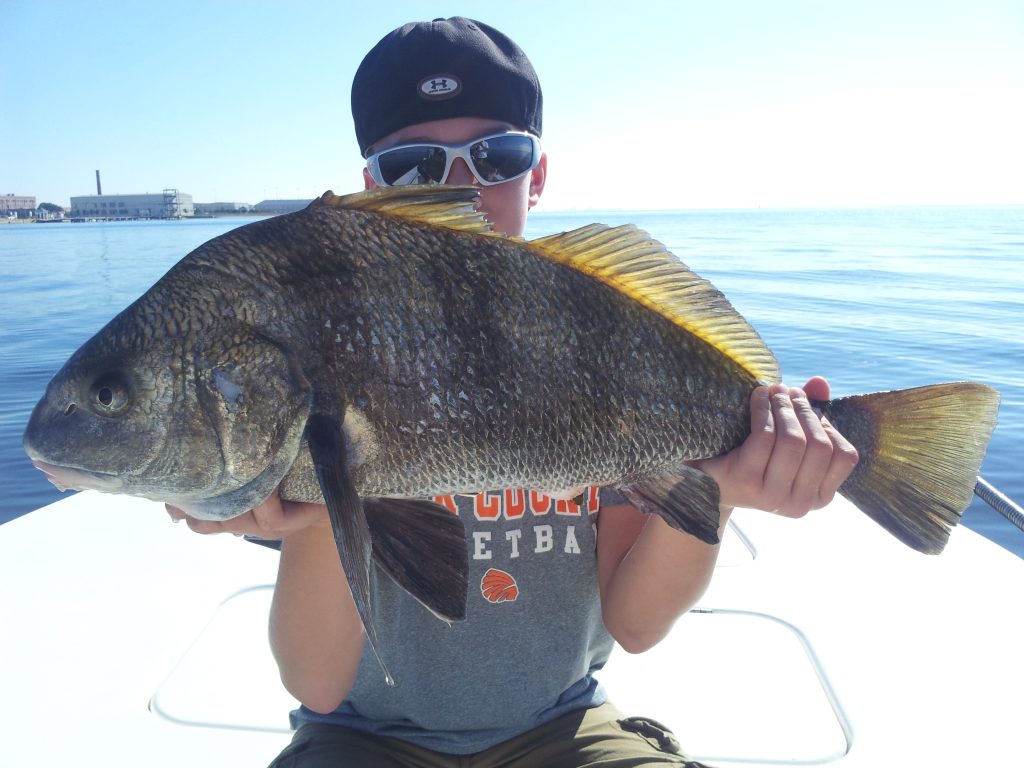
Scientific Name: Pogonias cromis
Average Size: 10–30 lbs
Trophy Size: 50–90 lbs
World Record: 113 lbs (Texas, 1988)
Black Drum are bottom-feeding powerhouses that thrive around bridges, channels, and oyster beds. They’re known for their brute strength and tasty fillets.
Best Time: Late Winter–Spring
Techniques: Bottom fishing with blue crab or shrimp near structure.
Nearshore & Offshore Species – Gulf of Mexico Adventures
Step offshore with our offshore fishing charters to experience the power and beauty of Gulf of Mexico sportfishing. From reef-dwelling Snapper to high-speed Kingfish, the action never stops.
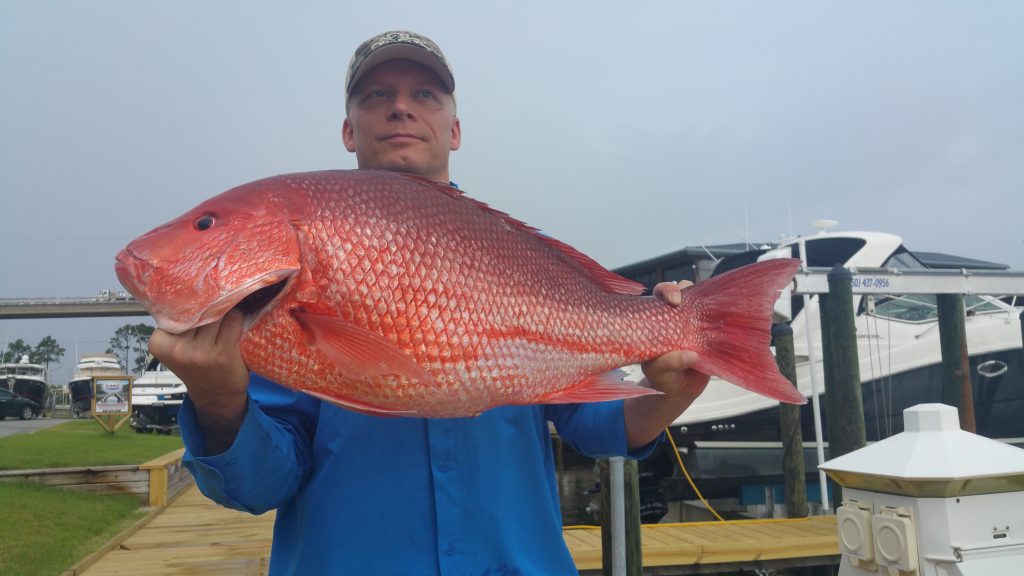
Red Snapper
Scientific Name: Lutjanus campechanus
Average Size: 8–20 lbs
Trophy Size: 30+ lbs
World Record: 50 lbs 4 oz (Louisiana, 1985)
The Gulf’s signature catch — Red Snapper are prized for their brilliant color and firm, delicious meat. Found on deep reefs and wrecks, they’re a highlight of every summer charter.
Best Time: June–August (federal season)
Techniques: Bottom fishing with cut bait, squid, or live pinfish using circle hooks.
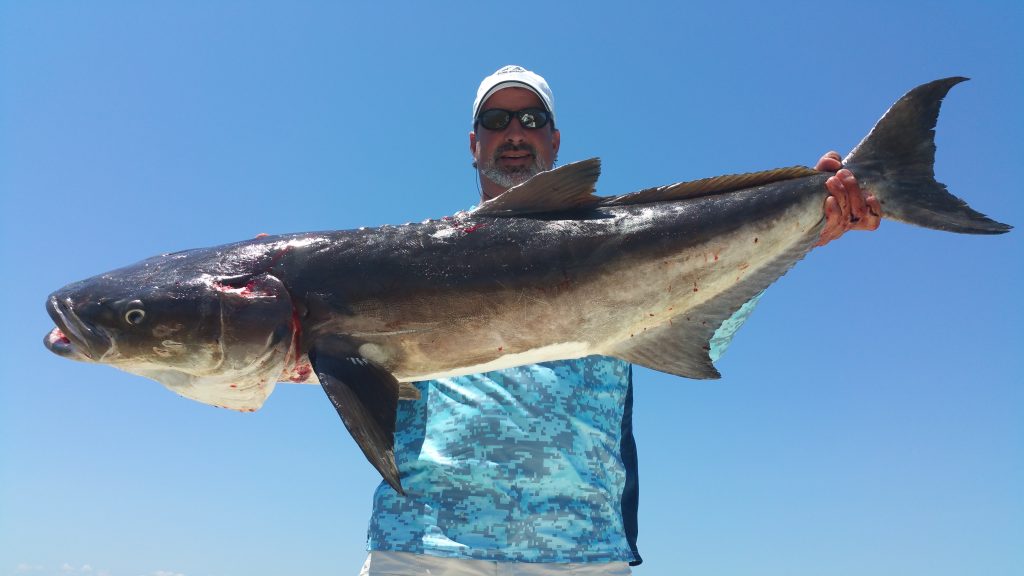
Cobia
Scientific Name: Rachycentron canadum
Average Size: 20–50 lbs
Trophy Size: 60–100+ lbs
World Record: 135 lbs 9 oz (Australia, 1985)
Cobia are a migratory powerhouse that cruise the beaches each spring. They’re one of the most sought-after fish for sight casting along the Panhandle coast.
Best Time: March–May
Techniques: Sight casting jigs or live eels to cruising fish, chumming around buoys and wrecks.
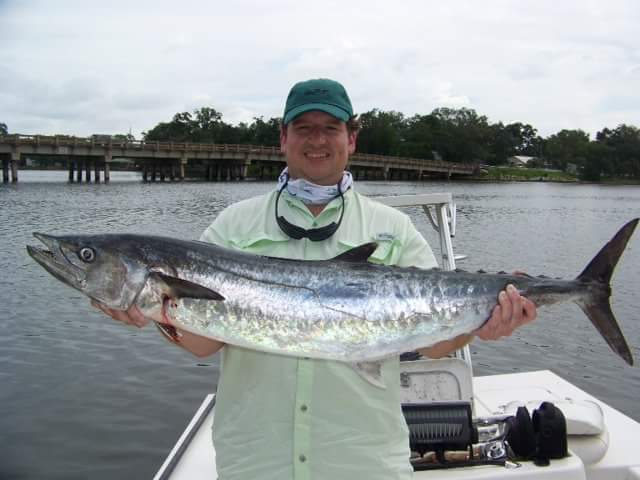
Kingfish (King Mackerel)
Scientific Name: Scomberomorus cavalla
Average Size: 10–30 lbs
Trophy Size: 40–60+ lbs “smokers”
World Record: 93 lbs (Puerto Rico, 1999)
Fast, fierce, and built for speed, Kingfish deliver some of the most exciting runs in the Gulf. They roam wrecks, bait schools, and nearshore reefs through the summer months.
Best Time: May–October
Techniques: Slow trolling live cigar minnows or blue runners.
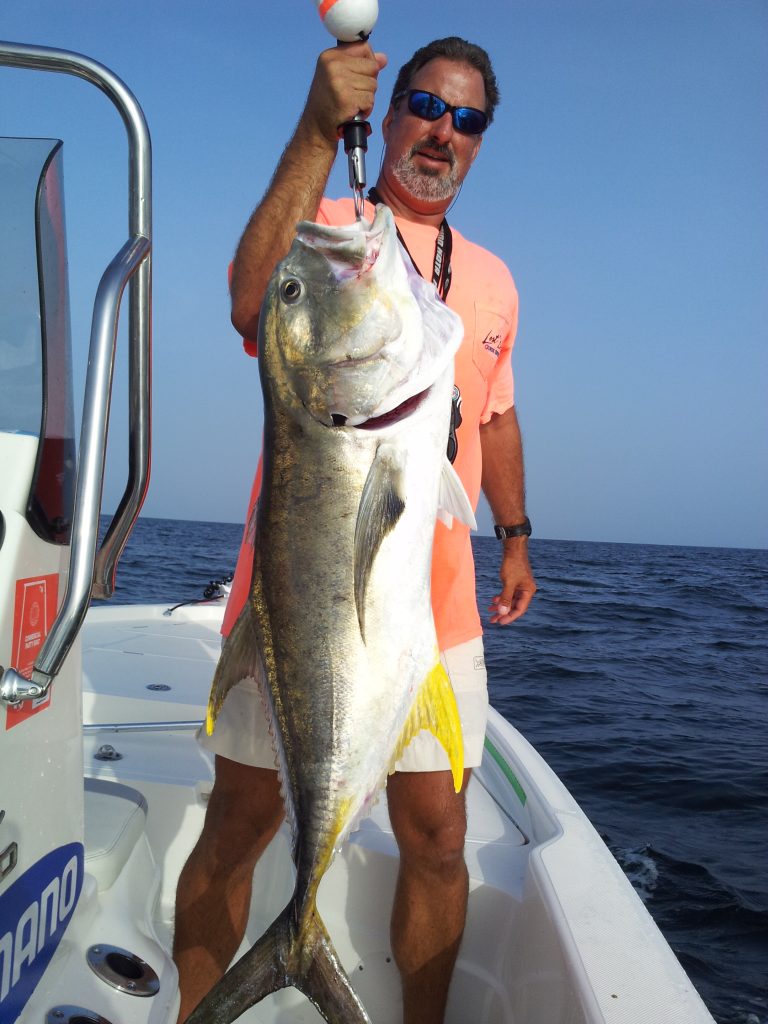
Greater Amberjack (“Reef Donkey”)
Scientific Name: Seriola dumerili
Average Size: 20–50 lbs
Trophy Size: 80–120+ lbs
World Record: 155 lbs (Bermuda, 2010)
Known as “reef donkeys” for their sheer power, Greater Amberjack are a true test of endurance. Found around deep wrecks and ledges, these brutes will bend your rod to the limit.
Best Time: April–October
Techniques: Vertical jigging, live bait fishing over deep structure, or chumming to raise them to the surface.
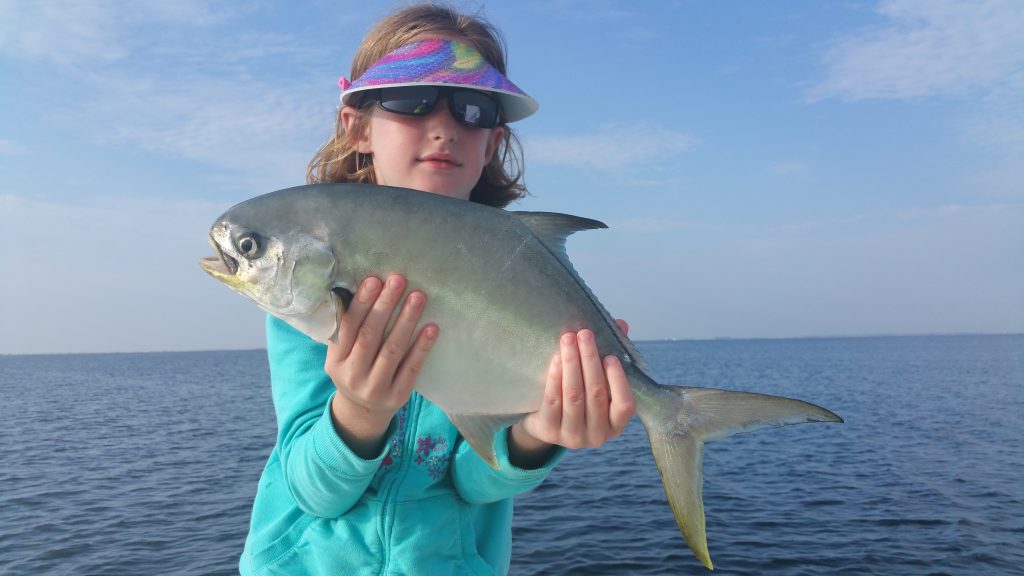
Permit
Scientific Name: Trachinotus falcatus
Average Size: 10–25 lbs
Trophy Size: 30–50+ lbs
World Record: 60 lbs (Florida Keys, 2002)
Permit are elusive and challenging — the ultimate prize for serious anglers. While more common farther south, they appear in the northern Gulf during summer’s warm waters.
Best Time: May–September
Techniques: Sight fishing with live crabs or jigs over wrecks and sandbars.
When to Fish Perdido Key
From bull reds in fall to snapper season in summer, there’s always something biting. Spring brings Cobia migrations, while cooler months are ideal for Trout and Black Drum. The Gulf never stops producing action — every season offers a new challenge.
Book Your Perdido Key Fishing Charter Today
Ready to hook into your next trophy? Book your Perdido Key fishing trip today. Our experienced captains know every reef, wreck, and flat from Pensacola to Orange Beach — ensuring a safe, action-packed day on the water.